August 2, 2015

A Festivus for the rest of us!

Religion for Atheists: A Non-Believer's Guide to the Uses of Religion Religion for Atheists: A Non-Believer's Guide to the Uses of Religion by Alain de Botton
My rating: 5 of 5 stars

Is it possible to accept that the supernatural elements of world religions are bunk, but that there are still useful practices, ideas, elements that are not replicated in secular culture? Could we steal the good bits from religion and discard the rest? When, in our rush to be free, we threw out the unclean bathwater of religious hypocrisy and belief, was it possible there was still a metaphorical baby in there we should have carefully placed aside? These are the questions Botton is attempting to answer in Religion for Atheists.

His basic assertion, which one might find debatable, is that in attempting to move beyond christianity we have secularized badly. He smartly points out that christians smoothly co-opted pagan practices in their rise to western dominance, but we've largely just run from the past altogether in modern secular culture. I understand this rubs some the wrong way, but it seems true to me that secular culture is missing a great deal I found useful in my former religious life and that leaving religion religion and declaring it evil is maybe the beginning and not the end of my own personal growth. And it seems like most who leave the church and secular culture at large have not yet even asked the question, "Is there something in religion, anything, that we can steal?" As the supposedly more rational side of the debate, can we not admit there may be nuance in the value and danger of religion, and that to sift through for the good within it is not necessarily the same as to apologize for its sins and make excuses? Or must we declare the whole enterprise corrupt and unmentionable like bizarrely dogmatic atheist puritans?

For me, his assertion of lost value in christianity stikes a chord, so I read his book with tremendous interest. I was not the least disappointed. The prose is thoughtful, crisp, witty. I found myself laughing out loud at one point which I did not expect. But to be sure, this is not a proof argument. If the idea that secular culture is lacking somehow and religion might have some good bits to steal just doesn't fly with you, you're not likely to enjoy most of what follows. This is a philosophical discussion of the possible lessons of any good bits of religion, and how it might look to attempt to apply them outside of that structure. Semi-hysterical assertions that Botton is attempting to set up a new religion and crown himself pope or that he is a secret christian (the horror) are hardly worth bothering with, considering the effort he goes to keep the tone conversational and thoughtful and completely non-dogmatic.

His points in general are well taken and I found myself nodding along with almost every chapter. Yes, an agape restaurant or similar place that provides a regular meeting place for people in the community to meet, share stories and discuss common values in a semi-organized fashion might be superior to drinking in pubs and hoping one or two of those things happen every now and again.

Yes, we should probably not cede the propagation of philosophical ideals solely to capitalists schlocking merchandise. I could probably get behind ad campaigns that exist merely to reinforce beneficial social ideas like forgiveness, grace, humility, non-dogmatism, etc.

Yes, museums would be a better replacement for church, as they have argued, if the works were clustered by philosophical topic rather than strictly by style/period. There's a place for both, but think of a museum with wings devoted to works dealing with fear of mortality, familial love, rage and anger, isolation, and loss.

Yes, architecture might be important, and good architecture that inspired us towards our higher ideals would be magnificent.

Yes, temples built not to gods but the ideals they embody would be highly useful and would give citizens a place and perhaps rituals to turn to when things get rough.

Choosing atheism is just the beginning. It does not automatically make one smart or moral. As Botton metions, one of the reasons religion exists in the first place is that as a species we are easily distracted and can only follow a few trains of thought at once, so we need regular reminders on the importance of humility, kindness, compassion, forgiveness, grace, etc. The rituals, the architecture, the meetings, all serve to remind us that we are aiming to maybe be a little better than we are, and provide a structure in attempting to embody our ideals and coping with the daily failure to do so. So why not steal them and do it just as well without all the supernatural fear-mongering? Is there a good reason not to, or are we all just so wounded by our respective religious experiences we can't even be seen touching any part of it?

To be honest, I find the appeal of doing church better than religious folk very appealing. What if we could build an organization (loosely organized perhaps) that ended up doing church better than the christians? What if we could do what they do without all the cover-ups and supernatural fear-mongering? In other words, what if we put our money where our mouth is?

What institutions are left after we abandon and stigmatize religion? Whose messages remain on full broadcast in the public sphere? The state? Capitalists? How do we push back against those powerful institutions and their myopic tendencies without some at least semi-formal institutional power in opposition, where a critical mass of human beings have formally banded together to remind the state the power and obedience are not the only good and to remind capitalism that money corrupts just as much as it cures? Do we somehow imagine that a bunch of atomized atheists are individually going to be able to push back against the money and power of industry and politics without some kind of institutional organization in response? Sure, institutions are by their nature corruptible, but this is a fixable problem. Do you trust the future of liberalism and morality to the hacker group Anonymous? Do you trust it to social media lynch mobs?

Maybe it's time we seriously consider some kind of religion for atheists. We don't need gods to discuss our morals and create structure and support for our moral and ethical development and to address existential doubts and questions with kindness and empathy, but maybe we can attempt to do so in a more organized and useful fashion, rather than leave it to the vagaries of who you happen to run into at the pub or the online outrage of the day.

This book is highly recommended.


View all my reviews

June 30, 2015

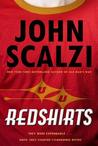
They're Redshirts, Get It?

RedshirtsRedshirts by John Scalzi
My rating: 3 of 5 stars

This is my first scalzi book, but I hope his other books are better. I love the first half, but was progressively more bored with it through the second half. Much like certain episodes of Community, the further one crawls up one's own ass in a story, the less entertaining/immersing it tends to be. The problem with going meta is it kind of kills immersion and any reason to care about the characters because one is too busy applauding the author and oneself for recognizing that these are characters in a story and someone wrote them, which, you must admit, is kind of a low bar. There's a weird trend of grown-ass adults recognizing the existential reality of a situation and waiting for the accolades to roll in.

"Well, really this is a story and stories tend to follow a formula." *stunned silence* *one man starts clapping slow, and is soon joined in thunderous applause*

It honestly seems like a cop out, a way to avoid writing an actually interesting story. Instead the author gets bored and starts dissecting the act of writing half-way through.

The other problem is, what's the end game after recognizing the meta-situation? It's just pointless. Scalzi essentially stops what is essentially a good story, by saying, "really this is just a story see?" and then it's done. There's no reason to care about the characters once they go back to the past to confront the writers. Nothing really interesting happens there. I would have been more interested somehow in a solution that involved the characters talking back to the author or fighting the narrative within the constraints of "the show." As is, I suppose it's a fine bit of navel-gazing if you're a writer, and like to mythologize and wank on about the act of writing and creating characters, but like most forms of masturbation, it's not going to be that interesting to anyone else.

That said, the first half was good enough that I'd be willing to give some of his less tongue-in-cheek books a try. This one's probably not staying on my bookshelf though.

View all my reviews

June 28, 2015

Technics and Civilization - Review

Technics and CivilizationTechnics and Civilization by Lewis Mumford
My rating: 4 of 5 stars

I came to this book from Postman's Amusing Ourselves to Death, curious about what he had to say about clocks and their effect on behavior. I envisioned it as a short tract, instead what I found was a glorious 450+ page in-depth philosophical examination the modern relationship of culture and the industrial machine as well as the historical events and trends that all had to converge to get to the dominance of technocratic thinking in our society at the time. I wish I had the depth of background to do a review of this book justice, but I don't, so instead I'll just mention some of the elements and ideas I found within that really appealed to me.

In retrospect Mumford seems like kind of a tragic radical. Alarmed at the direction society was heading with machines in our culture, he put a lot of time into identifying how we got here (here in 1934), and why we should change course and how we should do it. His argument is cogent, his prose is fluid and highly readable for such dense material, and his suggestions were taken up by virtually nobody. At least, nobody who controlled resources and the machines that managed and processed them. What strikes me most is his passion for a humanist society, that placed human happiness first, and wealth and efficiency second. Over and over he returns to the idea that we simply don't have to put machines (and by proxy the men who own them) first, we can put people first, and he comes at that idea from many different directions.

The man himself seems highly educated, well-read and incredibly intelligent, and indeed many of the things he advocates were well ahead of his time and frequently still relevant today, although partly because many of the real problems he addresses were never really adequately addressed.

Among his solutions to a society losing it's humanity to machine-centric thinking, are the following (some more practical than others):

1) Wind, Solar and Nuclear Energy. In 1934! Although, amusingly, he seems to doubt that atomic energy can ever really be exploited in any useable form.

2) He makes a strong case for public ownership of coal, oil and farmland. His reasoning being public resources vital to our survival should not be left to the vagaries of capitalism.

3) He advocates for a universal income, with the same arguments still used to advocate for universal income today.

4) Is almost amusingly casual in commenting that the political changes necessary for any of the ideas he advocates would be a revolution, the bloodlessness of such resting on the moral character of the revolutionaries.

Among his many thoughts and ideas about our relation to machine technology are the following (which I found helpful and thought-provoking):

1) Workers who are treated like cogs in a machine, who are stuck in jobs that are dehumanizing and soul-crushingly repetitive, will "loaf" and work as little as they can get away with and that should be understood as the natural human reaction to putting a human in an inhospitable environment.

2) There are aspects of life machines and industry are not able to address because they lie outside the purview of those things. This seems a silly thing to say out loud because it seems so obvious, but I believe it's something that could be said more often today. A modern way to say this would be something like, "There are aspects of life and human happiness that no cell-phone app or gadget you can buy will ever be able to help someone with."

3) He basically calls bullshit on the entire culture of production, advertising and identity consumerism. He call for a normalization of consumption, where over-consumption of goods would be perceived negatively, and where uniqueness and identity are broadcast through personality, not with consumer goods a substitute for personality.

4) He points out that labor-saving devices only reduce labor if we do not increase how much we consume and suggest that maybe if we didn't consume a bunch of pointless, mass-produced cheaply made and unnecessary goods, we might actually be able to work things like a 2-day work week. He suggests saving labor, only to labor more to consume more is ultimately not going to make us happy. 80 years later I'm not sure he's wrong.

5) A device or a product or a machine should only be used when it has a use appropriate to the specific moment and put down when no longer needed. Which again, seems obvious, but may still be good advice to the average cell-phone user.

There is so much more that I want to write about this book, but it would require more of me than I have to give to articulate every line of thought inspired in the reading. Perhaps in the next read-through. Quirks aside, I find Mumford a brilliant writer, with me exclaiming and highlighting nearly every chapter. If you're interested at all in the relationship between our society and technics, this is definitely one to add to your list.


View all my reviews

March 20, 2015

Are we not Sex Criminals?

Sex Criminals, Vol. 1: One Weird TrickSex Criminals, Vol. 1: One Weird Trick by Matt Fraction
My rating: 5 of 5 stars

If the basic premise of a hipster couple who can stop time when they have sex and use that power to rob banks doesn't draw you in, I don't know what to tell you. Except to say that the story is well-executed, the jokes are some of funniest, raunchiest sex jokes I've seen in my adult life (and I am usually a big prude about sex jokes), and I enjoyed it quite a bit. Recommended.

View all my reviews

Saga Review

Saga, Volume 1 (Saga #1-6)Saga, Volume 1 by Brian K. Vaughan
My rating: 4 of 5 stars

Gorgeous, weird, NSFW and occasionally shockingly violent. I enjoyed it quite a bit even though I'm increasingly over "shocking comic book violence." I like the premise a lot, I like the protagonists a great deal, I really like the evil aristocrats with TV screens for heads (which is not an original look, but I've always loved it in any context). Especially here, as the main villain seems to have poor control over what he displays on his monitor. Graphic sex and graphic violence, kind of a mix of gratuitous but more to sample than to drown in?

If you like your fantasy and SF well-mixed and seasoned to taste, this is a book you should enjoy.

View all my reviews

December 22, 2014

Science and the Afterlife Experience - Review

Science and the Afterlife Experience: Evidence for the Immortality of ConsciousnessScience and the Afterlife Experience: Evidence for the Immortality of Consciousness by Christopher David Carter
My rating: 3 of 5 stars

Well, two late night existential, mortality crises later, and here I am. I have MANY thoughts on this book, and will have a fuller review later. For now, let me say this. He makes some good philosophical points. For one, skepticism implies doubt pending evidence, not absolute denial of phenomena we don't understand. His overall thrust is that scientific materialism as practiced today can be it's own form of fundamentalism, pre-disposed to denying any evidence that doesn't point to a soulless, purposeless, mechanistic universe. Furthermore, that maybe it's possible to walk a middle path with regard to some paranormal phenomena that neither believes blindly or denies evidence. Having said that, he does seem a little too ready to believe some of the stories in this book. Although I will say he had a spectacular point about skeptics in pointing out that they are mostly psychologists, not physicists, and they are relying on out-dated physics to defend their skepticism, with no apparent awareness of the questions about consciousness raised by theories like quantum mechanics (this is a loose and potentially problematic statement, i know). And also just in pointing out that even materialists still don't have a tremendously sound definition of consciousness, although that particular claim I would like to research more.

There are many stories here submitted as evidence for reincarnation, supernatural apparitions and contact with the other side through mediums. They are well sourced generally, and he tends to pick phenomena witnessed by many people, researched by skeptics who failed to provide a definitive debunking, and in some cases became believers, where witnesses were cross-examined to see if their stories held up. He works though the possible explanations for each event, including fraud, and for many of these stories narrows it down to: evidence for survival of consciousness. He certainly acknowledges that fraud has existed in all of these areas, but takes great pains to deliver only evidence that seems to have removed the possibility of fraud. The most interesting of all these cases to me is the paranormal investigator who dies in 1903, and then, if the evidence is to be believed, sends cryptic messages from beyond through several mediums around the world which make no sense until all of them are put together. I'm not sure I believe that one, but it's an interesting idea. But that's what all this comes down to, doesn't it? You either believe that people saw ghosts, can channel living human consciousness from behond the grave or are reincarnated, or you believe the reports are bunk, that people are excitable, or impressionable, or deluded or just flat-out liars.

I'm not sure what I believe on this stuff (and I know it's not proper in this day and age to not declare all of the paranormal debunked and reassure my readers that the only mysteries the universe has left to reveal are relatively mundane time and space mathematical formulas), but I did enjoy reading this attempt at looking for evidence of the afterlife with as little prejudice as possible. The degree to which you believe the stories inside and how much the author succeeded in abandoning his biases, will still probably entirely depend on the level of skepticism you have going into it.

View all my reviews

November 26, 2014

Fringe-ology

Fringe-ology: How I Tried to Explain Away the Unexplainable-And Couldn'tFringe-ology: How I Tried to Explain Away the Unexplainable-And Couldn't by Steve Volk
My rating: 5 of 5 stars

I left my childhood religion informally at 23 or so and then formally at 34 at the same time I came out of the closet. That religion, Seventh-Day Adventism, had a very specific and science fictional eschatology and world view and I realized one day after leaving it that I had to decide what my new world view was. Did I believe in anything beyond the material? Had my views on ghosts/UFOs/Leprechauns changed? Did I believe in a universe run on numerical laws or hidden stories, the plots of which had yet to be revealed? Although, what are the mathematical laws of nature except a kind of story about how things are? In any case, the answer that night was much the same then as it is now: Hell if I know.

That night did spark an interest, however, in reading what there was to read about "fringe" topics, the branches of human experience where rational men of science have yet to give their formal blessing. So I went hunting on Amazon for anything that might fit, and almost immediately stumbled across Fringe-ology by Steve Volk. Lucky for me it's a great overview of paranormal topics.

The introduction alone was almost worth the price of the book to me, containing an earnest and well-argued plea for everyone to stop talking past each other on some of these topics and admit we don't know what we don't know. And that maybe the other side knows a little more than we want to admit.

What was worth the price of the book alone was the chapter on Elizabeth Kubler-Ross, who I not really read much about up until now. You may have heard her name, she was a ground-breaking medical researcher who identified the 5 stages of grief and who authored the book On Death and Dying, which was instrumental in getting hospice and hospital reform for dying patients, who were routinely ignored and left unattended due to psychological blind spots on the part of doctors/hospitals at the time.

What's especially interesting about her story is the promise of the paranormal and the warning contained in her story. Left out of her book was a chapter on the out-of-body experiences and end-of-life visitations she had compiled in her time with terminally ill patients. She hadn't been looking for it and she wasn't the only one to witness/notice the events, but she thought it was a topic the general public wasn't ready for (which was probably a wise choice). But it sparked an interest in her, that didn't necessarily take her to a happy place. However legitimate and interesting her personal experiences had been, they eventually led her to divorce and then falling in with a medium who later turned out to be a simple con-man. In other words, there is a serious danger in losing one's way on these topics, even for the most sober observers.

The remaining chapters cover topics like lucid dreaming, the overview effect, the mass UFO sighting in Stephenville, Texas, the attempts to study psi scientifically, the pros and cons of professional skeptics, mediumship, a potential haunting in Volk's own childhood and a PTSD therapy that has the additional and unintended side-effect of allowing the subject to converse with departed loved ones, or convincing mental replicas, in a meditative state.

Fringe-ology reads like what it is, a series of investigative reports by an experienced newspaper reporter, with no obvious pre-conceptions on what he should find. I like his open-mindedness, I like his critical thinking skills, and I like the heart he brings to the project. I'm not convinced he saw anything entirely "real" in some of his reports, but then neither is he. He really doesn't take a hard stand on any of it, just calls it like he saw it. In an age that mostly seems to breed people prone to standing on soap-boxes and confidently declaring they have seen the vast shape and scope of all creation and from that lofty perspective have a pretty good handle on what happens and what does happen here and elsewhere and what goes on in the hearts of men, it's extremely refreshing to read stories about the paranormal that's aren't "just so."

It's really a fun, though-provoking read and will at least give you something to think about even if you don't change your mind about anything. Volk's writing is accessible and compelling and will keep you turning pages well into the night. Highly recommended.

Favorite Quotes:

"The Central problem, I think, is that as a species we seem to lack humility."

"Me? I'd like to believe in an afterlife, but I'm also not interested in fooling myself."

"If we've learned one thing in this book already, people don't like the unknown very much."

"The people of Stephenville, for instance, never asked to play hose to a paranormal controversy. The people of Stephenville just looked up."

"The scientific method is itself important, but it is not antidote to the very human frailty of ignoring information we don't like and embracing the information we do."

"We don't have to make the choice that popular culture gives us; we don't have to choose one and dispense with the other. This is not a world of binary opposites. We just live that way."

View all my reviews